Original Title: "Changpeng Zhao BitcoinAsia2026 Keynote: Bitcoin $1 Million Will Arrive Sooner, Multi-Chain Is Not a Zero-Sum Game"
Source: Foresight News
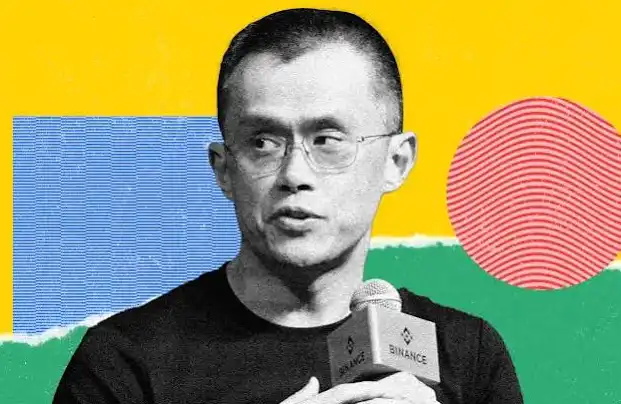
At the "Bitcoin Asia 2026" conference in Hong Kong, Binance founder Changpeng Zhao shared his views on Bitcoin's price expectations, utility expansion, global regulatory attitudes, multi-chain ecosystems, and the role of cryptocurrency in the AI proxy era.
Bitcoin $1 Million and Utility Expansion
Zhao stated that Bitcoin reaching $1 million is an inevitable event that will happen faster than the anticipated 25 years. However, he believes that utility expansion is more important than price. Bitcoin needs to achieve widespread adoption for payments and become a reserve asset for retirement funds.
He mentioned that people often overestimate what can be achieved in a year but underestimate what can be done in a decade. In the next ten years, a large amount of infrastructure will be built. Over the past two years, there has been a significant shift in traditional finance's attitude towards Bitcoin. The tokenization of stocks has seen rapid growth in the past year, with Binance bStocks experiencing fast growth within approximately three months of its launch.
He stated that in addition to this, multiple sectors such as payments, AI, agentic financial infrastructure, stablecoins, and tokenization will see significant development in the next decade, making it the most opportune moment in history.
Tokenization and Bitcoin's Mutual Promotion
Zhao mentioned that the Bitcoin blockchain currently does not support tokenization business, which mainly occurs on other blockchains. However, different sectors within the crypto industry mutually promote each other. Those who understand Bitcoin will eventually understand other blockchains and tokens, and those who enter through stock tokenization will eventually pay attention to Bitcoin.
He gave an example, stating that it is difficult for Asians to open a US stock brokerage account, and the inconvenient trading hours of US stocks pose a challenge. Once stocks are tokenized, more people who were previously unable to trade US stocks will be able to participate through crypto platforms. These individuals may then also start to explore Bitcoin exposure that they did not have before.
Bitcoin and Government Power Relationship
When discussing Bitcoin's relationship with governmental power, Zhao mentioned that Bitcoin itself will not weaken or strengthen government power; the real impact comes from the government's own choices. In history, weaker governments have sometimes led to better economic performance. For example, the relatively weaker US government has fostered one of the world's strongest economies. When the SEC relinquished some regulatory power, the industry saw growth, whereas former chairman Gary Gensler attempted to exert control over everything, resulting in hindering industry growth.
He stated that Bitcoin, as a decentralized technology, would give individuals more sovereignty, but its privacy-centric design has flaws, as on-chain transactions can be easily tracked. Governments can choose whether to leverage these features, such as declaring holding Bitcoin illegal or imposing a 36% tax on each transaction, which would stifle industry development. Governments may seem to have great power, but zero tax on zero is still zero, while imposing a 6% tax on a trillion-dollar market would generate significant revenue.
He also mentioned that most governments have relatively paid attention to Bitcoin, but many countries still lack a crypto regulatory framework. Understanding of Bitcoin among government officials remains a minority, and in some countries, dominance by an older generation has led to a more conservative attitude. However, he did feel that a shift is happening, although some people still hold a biased view that Bitcoin is mainly used by drug traffickers.
Regulatory Progress by Country
When providing advice to governments of various countries, Zhao Changpeng usually starts with establishing a crypto regulatory framework, setting up crypto reserves, issuing a national stablecoin, promoting asset tokenization, etc. Many countries have not yet established crypto reserves or issued a national stablecoin, and he would advise these countries to move forward quickly.
He mentioned that the UAE currently has the most advanced crypto regulation, with the Abu Dhabi Global Market (ADGM) granting Binance nearly global licenses covering all products. However, the UAE has not yet issued a major stablecoin. The U.S. has made more progress in stablecoin and exchange platform regulation, with rapid progress at the federal level by the CFTC in futures and derivatives licensing. Japan is currently more proactive, China's Hong Kong is progressing rapidly, and Singapore is relatively conservative.
He also noted that regulatory progress is swift in Pakistan, but implementation is lagging. Binance has not yet opened customer fund bank accounts locally or issued stablecoins. Kazakhstan is progressing rapidly, with good banking support locally for Binance and Binance Pay supporting QR code payments. He mentioned that he would be traveling to Kazakhstan and Kyrgyzstan next week.
Bitcoin as a Strategic Reserve Asset
Zhao Changpeng stated that many countries misunderstand Bitcoin and see it as a risky asset. However, the real risk lies in not using Bitcoin, just as not investing in AI technology is a true risk for a country.
Regarding a strategic reserve, he mentioned that Bitcoin would definitely be more important than gold. The transition for large countries will take time, but this trend will occur. Bitcoin itself is a better asset than gold. He believed that the likelihood of a better digital currency emerging than Bitcoin and surpassing it or taking the lead before Bitcoin surpasses gold is very low. Bitcoin will soon surpass gold, with the current gap between the two being only about 10 times, which may be achieved in the next bull market.
In terms of reserve allocation recommendations, he stated that he usually advises countries to hold a portion of their reserves in the top five cryptocurrencies by market capitalization (excluding stablecoins), in proportion to their market value. This is the simplest and most market-oriented approach, with Bitcoin usually representing over 50% of the allocation, Ethereum 10%-20%, and other assets like BNB also included.
Multi-Chain Ecosystem: A Win-Win Game
Addressing the question of whether only Bitcoin should be promoted, Zhao Changpeng stated that if the industry only had Bitcoin, the overall development would be much slower. The existence of other public blockchains does not weaken Bitcoin; instead, it helps Bitcoin grow. Without other public blockchains, Bitcoin's scale would only be smaller.
He mentioned that Bitcoin has the largest market capitalization and the highest level of decentralization, making it a long-term reserve asset. On the other hand, other public blockchains innovate faster, making it easier for new ideas to be tried on other chains first and then adopted by Bitcoin in reverse. He emphasized that the crypto industry should adopt an open attitude, accepting multiple public blockchains, various exchanges, multiple DEXs, and perpetual contract platforms to foster more competition and innovation. The industry is not a zero-sum game of "winner takes all."
Difficulty in Predicting the Next Cycle's Driver
Regarding the driving forces of the next cycle, Zhao Changpeng mentioned that currently, Real World Assets (RWA) and the AI sector show strong momentum. Sectors such as stablecoins, centralized exchanges, decentralized exchanges, meme coins, which had previously experienced growth, will continue to grow. NFTs may also make a comeback in some form.
He expressed the difficulty in predicting what the next breakout point would be, similar to how the ICO boom in early 2017 or the NFT craze of the last six months could not have been foreseen. This requires entrepreneurs to create new trends.
Integration of AI Agents and Cryptocurrency
Zhao Changpeng stated that in the future, the funds used by billions of AI agents for automatic buying, selling, negotiation, and trading will undoubtedly be in cryptocurrency, likely starting with stablecoins and then gradually incorporating other public chain assets like Bitcoin.
He mentioned that he has already discussed with several top AI companies the possibility of issuing tokens. Building data centers requires substantial funds, with the cost of 1 GW of mining power ranging from $30 billion to $50 billion. Some AI companies plan to build hundreds of GW of mining power in the coming years, so issuing data center tokens could allow holders to access mining power rights in the future.
He also mentioned that the payment scenarios for AI agents may be implemented later than the trading scenarios. Currently, AI companies are more focused on helping agents find the best trading solutions; however, in trading scenarios, AI can significantly improve transaction efficiency by about 10 times.
Bitcoin Positioned as Store of Value, Payments Will Gradually Shift to Native Tokens
Zhao Changpeng stated that whether in the human world or the AI world, Bitcoin will most likely continue to primarily exist as a store of value, with stablecoins or other cryptocurrencies taking on machine-to-machine business and transactional scenarios.
He mentioned that as people increasingly use stablecoins for payments, many transactions in the future will move to native cryptocurrencies. This is because individuals holding assets like Bitcoin for the long term are unwilling to convert them to a stablecoin pegged to fiat currency value for payments, adding an unnecessary step. Using himself as an example, he said that he usually holds BNB and Bitcoin, and when making purchases with the Binance card, the payment is directly deducted in BNB at the prevailing exchange rate, without first converting to USD.
Original Article Link